


Advanced Dungeons & Dragons: DM Tips for Better Campaigns
- Nov 21, 2025
- 6 min read

Introduction
Dungeons & Dragons has gone from a niche tabletop hobby to a global pop culture phenomenon.
In the past few years alone, D&D has exploded across movies, TV, video games, and streaming culture:
Stranger Things bringing dice, Demogorgons, and Hellfire Club energy into mainstream TV
Critical Role selling out live theaters and shaping how people see modern tabletop roleplay
Baldur’s Gate 3 winning Game of the Year and showing how deep D&D storytelling can go
Fantasy films like The Lord of the Rings and Dungeons & Dragons: Honor Among Thieves bringing party-based adventures to the big screen
Video games like Dragon Age, The Witcher, and Skyrim popularizing party dynamics, moral choices, and open-world storytelling
Tabletop culture exploding on TikTok, YouTube Shorts, and Twitch
More people than ever are becoming Dungeon Masters, and with that comes a hard truth: running a great D&D game is much harder than it looks.
After years of DMing, hosting long-form campaigns, and actually finishing multiple story arcs, I’ve learned that real DM skill is built through experience, mistakes, and pure player chaos. This guide is built specifically for Dungeon Masters (DMs) who want better pacing, stronger encounters, smarter rewards, and more memorable campaigns.
These are practical, real-table D&D DM tips — not theory.
If you’re looking for beginner-focused advice, check out my earlier guide: 10 Tips and Tricks for Dungeon Masters (link this in Wix).
The Best Party Size for D&D Campaigns
One of the first mistakes new Dungeon Masters make is underestimating how much party size affects balance, pacing, and overall workload. I’ve run games with anywhere from 3 players to 7+ players, and each size honestly feels like you’re running a completely different system.
Before even talking about party size, it’s important to explain the structure I usually build my sessions around. I follow what I call the “Rule of Three”:
Session Structure (Rule of Three):
The party receives the quest or critical information (usually through a king, queen, or guild master)
Travel toward the objective (puzzles, wilderness travel, traps, dungeons, or small combat encounters)
Face the main threat of the session (boss fight, major reveal, or story turning point)
This structure scales based on party size:
With 7 players, a single encounter can take 1–1.5 hours
With 3 players, the same encounter can take as little as 15 minutes
That’s why encounter count should scale with party size, not just party level.
Three-player parties create very focused, tactical gameplay. The group sticks together, decisions happen quickly, and story progress feels incredibly efficient. However, three-player groups burn through content extremely fast. You’ll often need to add encounters mid-session. They’re also fragile — if one player misses a session, you drop to two players, which becomes very hard to balance. For new DMs, this party size is risky.
Seven-player parties are the opposite problem. Combat slows to a crawl, side conversations explode, and a three-hour session can feel like barely any progress was made. The party splits into sub-groups, forcing the DM to juggle multiple scenes at once. It’s socially fun, but mechanically exhausting. If you’ve ever wondered how shows like Critical Role manage it, the answer is heavy prep and years of experience.
The real sweet spot is five players.
Five-player parties provide strong teamwork, balanced combat pacing, and flexibility when someone misses a session. They’re large enough to feel heroic, but small enough to stay controlled.
This makes five players the best foundation for long-term D&D campaigns.
Smart Gold & Magic Item Rewards for D&D
Many Dungeon Masters think giving out large amounts of gold automatically makes the game more fun. I used to think that too — especially after watching groups like Dungeon Dudes and Critical Role hand out gold like candy. It looks exciting, it looks rewarding, and it feels like that’s how the game should be played.
What I discovered over real long-term campaigns is this: players don’t actually care about mundane gear.
They don’t care about extra swords. They don’t care about a thousand arrows. None of that feels valuable unless they have something like a Bag of Holding to make it convenient. What they really care about is magic items.
Players will always try to turn gold into magical power.
Because of that, I stopped thinking in terms of “How much gold should I give?” and started thinking in terms of:
"How quickly should my players be able to buy magic items?"
The system that works best is to first decide how much magic items cost in your world. Especially focus on the price of uncommon magic items, because that’s the tier players will chase early.
Then, pace gold rewards using:
Number of players in the party
Number of sessions you want it to take to earn a magic item
The gold cost of that magic item tier
Instead of dumping random treasure, you’re intentionally controlling player power through gold flow.
I also strongly recommend building the 50% resale rule directly into your world. Magic items should only sell back for half their value. If uncommon items cost 300 gold and rare items cost 1,000 gold, players should not be able to buy three cheap items, resell them, and jump tiers too quickly.
This matters even more for non-attunement items like Bags of Holding and utility items that can be stacked. Half-value resale forces real choices: do they stack weaker items, or save for something powerful? That tension keeps magic items rare, meaningful, and well-balanced.
Why Out-of-Game Planning Makes Better In-Game Stories
One of the best accidental discoveries I made as a DM wasn’t in the game — it was between sessions.
In one campaign, my players started a group chat. They planned strategies, argued about character choices, roasted NPCs, and even trash-talked my DM decisions (which honestly was hilarious).
This kind of outside-of-game communication does incredible things for your campaign:
Players become emotionally invested
They plan like actual adventurers
The party feels real, not random
Now I intentionally end sessions with:
Big decisions
Moral dilemmas
Multiple possible paths
Then I let them argue and plan outside the table.
This doesn’t make the game “DM vs Players” — it makes it feel like a living world pushing back.
Running High-Level D&D (Level 15–20+)
High-level Dungeons & Dragons is where most campaigns break.
At level 20, the math of the game changes:
Proficiency bonuses reach +6
Ability mods reach +5 or higher
Many players have +11 to +15 in their best skills
This means challenge ratings and default DCs stop working.
Fixing Ability Check DCs
At this level:
DC 10–15 = automatic success
DC 17–20 = moderately easy
Real challenges should look like:
DC 30
DC 33
DC 35+
Let rogues auto-pick basic locks. Save rolls for world-shaking challenges like planar vaults and god-tier defenses.
Designing Better Combat Encounters as a Dungeon Master
Combat is where most D&D campaigns either shine or completely fall apart. This is where tension lives, where players remember moments, and where your villains become legends.
The three core pillars of great combat are:
Damage
Terrain
Saving Throws
These three elements should always work together, not separately.
Terrain Is More Important Than Stats
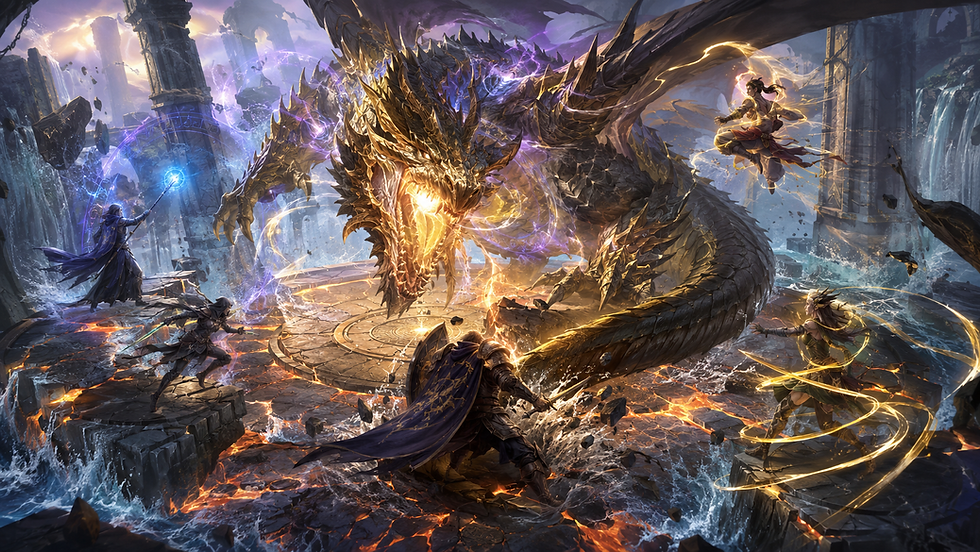
A big monster standing in an empty room is boring. The room should be just as dangerous as the creature.
Use dynamic terrain to make encounters memorable:
Lava pits and fire zones
Collapsing floors and crumbling bridges
Moving platforms or rotating rooms
High-elevation areas with fall risk
Lair actions that actively reshape the battlefield
I once ran a boss fight where a mountain slowly transformed into a collapsing chasm mid-battle. Players had to fly, teleport, or risk death. It completely changed how they positioned themselves and made the fight unforgettable.
Designing Damage That Creates Urgency
Boss fights should feel fast, scary, and dangerous.
The ideal boss fight lasts:
3–6 rounds
A system that works extremely well is this:
Take the highest HP character in the party
Boss abilities should threaten roughly half that HP in damage
Example: A Barbarian with 280 HP means boss attacks should threaten 130–150 damage ranges, split across multi-attacks when needed. This creates urgency, panic, and real stakes.
Saving Throws as Part of Combat Design
Saving throws shouldn’t feel like a separate system — they should feel like a natural part of the fight itself. High-level monsters should challenge different defenses, not just hit the party with the same type of save over and over.
Build encounters so monsters naturally pressure multiple stats through their actions, lair effects, terrain changes, and legendary abilities. This keeps players adaptive and stops any one build from trivializing your encounters.
Always describe the danger before the roll:
“The dragon inhales deeply… the air ignites around you, the stone beneath your feet begins to glow, and the heat becomes unbearable. You feel, in your bones, that this blast could be lethal.”
Let your players feel the threat and the stakes before the dice hit the table.
Final Thoughts for Dungeon Masters
Good Dungeon Masters aren’t born — they are built through failure, chaos, and learning what actually works at the table.
If you want to become a better DM:
Respect pacing
Control magic item power
Encourage player planning
Design deadly but fair encounters
Your job isn’t to kill the party. Your job is to make them feel like legends who barely survived.


Comments