


Cloak of Sloth 5e: A Cursed Artifact of Sleep, Power, and Lethargy
- Apr 24
- 5 min read
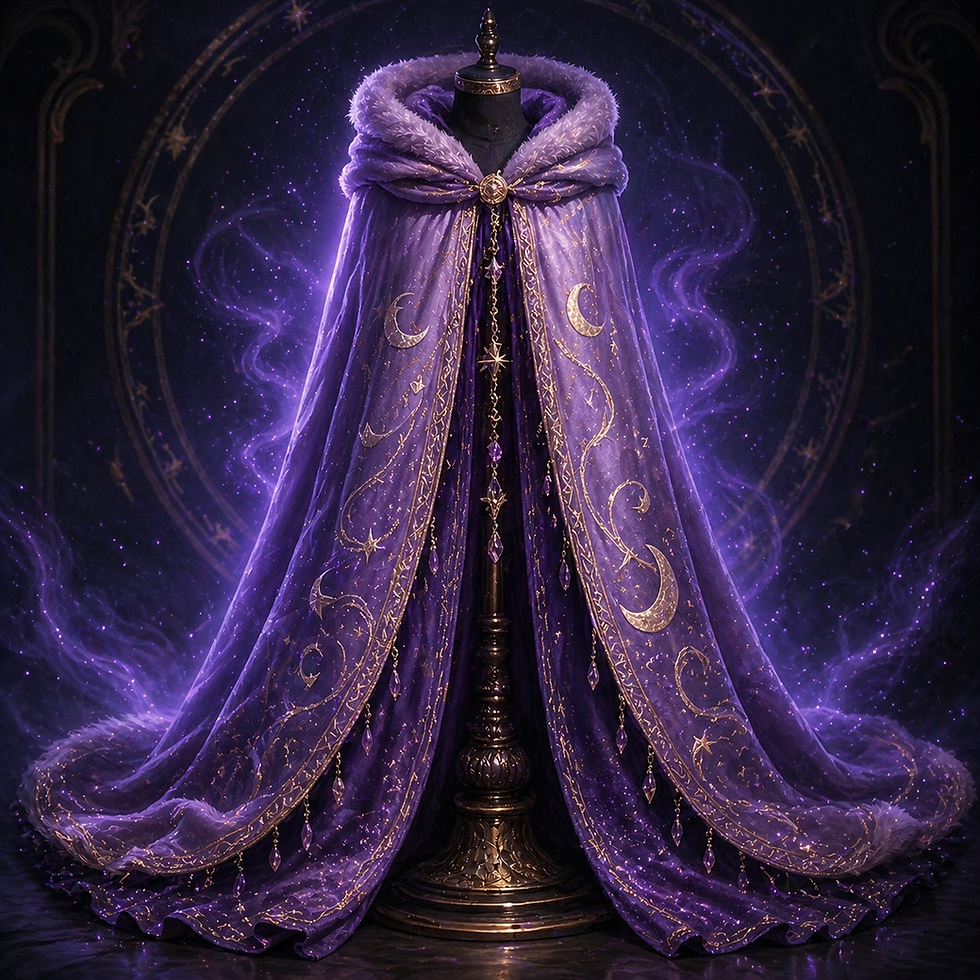
The Cloak of Sloth: A mesmerizing blend of comfort and magic, exuding an aura of tranquility with its lavender hues, dreamy patterns, and celestial embroidery. A cozy garment with a dangerous allure.
Like the enchanted sleep traps in Sleeping Beauty, the drowsy haze of The Legend of Zelda’s lullaby magic, or even the immovable calm of Snorlax, the Cloak of Sloth taps into a familiar fantasy: the irresistible pull of rest when action is most needed. In a Dungeons & Dragons 5e campaign, this concept becomes more than flavor—it transforms into a powerful, dangerous artifact that tempts players with comfort while quietly undermining their will to act. The Cloak of Sloth embodies the essence of lethargy, offering both mechanical strength and narrative tension, making it a compelling addition for Dungeon Masters seeking to introduce risk, temptation, and unpredictability into their games.
Have you ever wanted to weave the Seven Deadly Sins into your Dungeons & Dragons 5e campaigns? The Cloak of Sloth is a captivating magical artifact that embodies the essence of sleepiness and laziness, tempting players with its irresistible charm. This cursed item introduces an element of intrigue and unpredictability, allowing Dungeon Masters to challenge their players with both power and peril.
The cloak itself is an enchanting garment, radiating warmth and coziness, with a faint lavender scent that soothes the senses. Its soft, puffy fabric exudes relaxation, inviting not only the wearer but also those around them to surrender to its calming aura. As it whispers gentle melodies and emits a comforting white noise, the cloak compels individuals to sleep, even in situations demanding alertness and action.
What sets the Cloak of Sloth apart is its ability to render creatures unconscious—a potent condition that bypasses the defenses of many foes. While this makes it a powerful tool in encounters, it also poses significant risks. The wearer must grapple with the cloak's influence, which tempts them into lethargy, potentially hindering their progress or placing the party in danger. Additionally, the cloak’s allure can attract unwanted attention, leading to precarious alliances or confrontations with those who desire its power.
For Dungeon Masters, incorporating the Cloak of Sloth requires careful balance. Its ability to induce unconsciousness is undeniably powerful, so consider pairing it with challenging encounters, such as glass-cannon monsters or resilient enemies. Narrative consequences can also enhance its impact, as the cloak's temptation may strain relationships or create moral dilemmas. By introducing the Cloak of Sloth, you can enrich your campaign with high-stakes challenges and the enduring tension between ambition and lethargy.
Cloak of Sloth (Cursed Artifact Item)
This cursed relic drips with indolent magic, exuding a heavy, suffocating lethargy. When donned, it smothers the wearer—and those nearby—in an oppressive desire to rest, to do nothing, to surrender to stillness. It seeps into the mind like warm fog, convincing all who feel its presence that their work is already done—or not worth doing at all.
Anyone affected may perform tasks poorly, half-heartedly, or abandon them entirely. With the expenditure of a charge, the wearer can sap the will of those nearby, slowing their bodies and dulling their minds—sometimes dragging them into sudden, irresistible sleep.
Curse:
Though the cloak bestows great power upon its wearer, it seeps a languid magic into the air, dulling the wills of those nearby. Friends and allies within its reach feel an overwhelming pull toward idleness—a seductive whisper to rest, to cease striving, to let the world drift by unheeded. Motivation drains from their hearts, effort feels meaningless, and their limbs grow heavy with disinterest. All party members within range suffer disadvantage on Dexterity checks, as lethargy slows their every move.
Ability:
Activation: Free Action
Charges: 1
DC: 13 + PB
Usage: Once per long rest use a charge and roll a D100.
Effect Table:
Lethargic Feeling (1–50)
Mechanics: Target creature within 30 feet must succeed on a Wisdom save or suffer disadvantage on all d20 rolls for ½ PB rounds.
Visual: A dull gray aura latches onto the target, weighing them down with invisible force.
Slot Time (51–80)
Mechanics: Target must make a Constitution save. On fail, speed is halved, -2 to AC and Dex and Str saves for ½ PB rounds.
Visual: A ripple of slow-motion distorts the air, freezing their reflexes.
Energy Drain (81–95)
Mechanics: Target makes Strength save. On fail, speed halved and -4 to all d20 rolls for ½ PB rounds.
Visual: Their muscles slacken as a spectral hand draws vigor from their body.
Sloth's Embrace (96–100)
Mechanics: Choose ½ PB creatures within 30 feet. They must succeed on a Con save or fall unconscious for 1 round.
Visual: A wave of oppressive fatigue pulses out, like warm air in a sealed tomb.
Thought Process:
I’m a huge fan of the Sleep spell and the creative chaos of knocking creatures unconscious. Another favorite of mine is the Bane spell, along with mechanics like Exhaustion. These features add a layer of challenge and strategy to the game, making it incredibly engaging for both players and DMs.
If you’re looking for a fun twist, consider using sleep powder to knock the party unconscious—it opens up countless narrative opportunities. For example, the party might wake up imprisoned, setting the stage for an escape scenario or interrogation.
Now, about this cloak—it’s an exceptionally powerful item at any stage of a campaign. Its debuffing abilities mean that most, if not all, creatures are susceptible to its effects. The exhaustion-inducing power is especially impactful since it affects all creatures equally. However, the drawback—imposing disadvantage on Dexterity checks—strikes a good balance. Dexterity ability checks are vital for sneaking around as well as unlocking traps and doors. So this limitation keeps the item from being overpowered.
In-Game Usage:
This cloak is a versatile tool, usable by all classes:
Fighters can employ it to debuff or immobilize a primary target in combat.
Wizards and other spellcasters can use it to lower a creature’s defenses for their next saving throw-dependent spell.
Rogues and stealth-focused characters will appreciate its ability to incapacitate guards or reduce perception checks, perfect for sneaky situations.
The only real drawback is the disadvantage it applies to Dexterity checks, which can be a significant trade-off in high-stakes situations.
As for introducing the cloak into your campaign, it works well at any stage, though it fits especially well in early or mid-campaign play. A creative way to include it is by linking it to a mini-boss or a unique encounter. For example, the cloak could be worn by a sleeping brute, such as a giant or troll—a situation reminiscent of Snorlax. This kind of encounter can include the added twist of the creature’s presence inducing sleep in those nearby.


Comments