


D&D Homebrew Subclasses Creation Part 1: Crafting Strong Themes
- Apr 24
- 3 min read
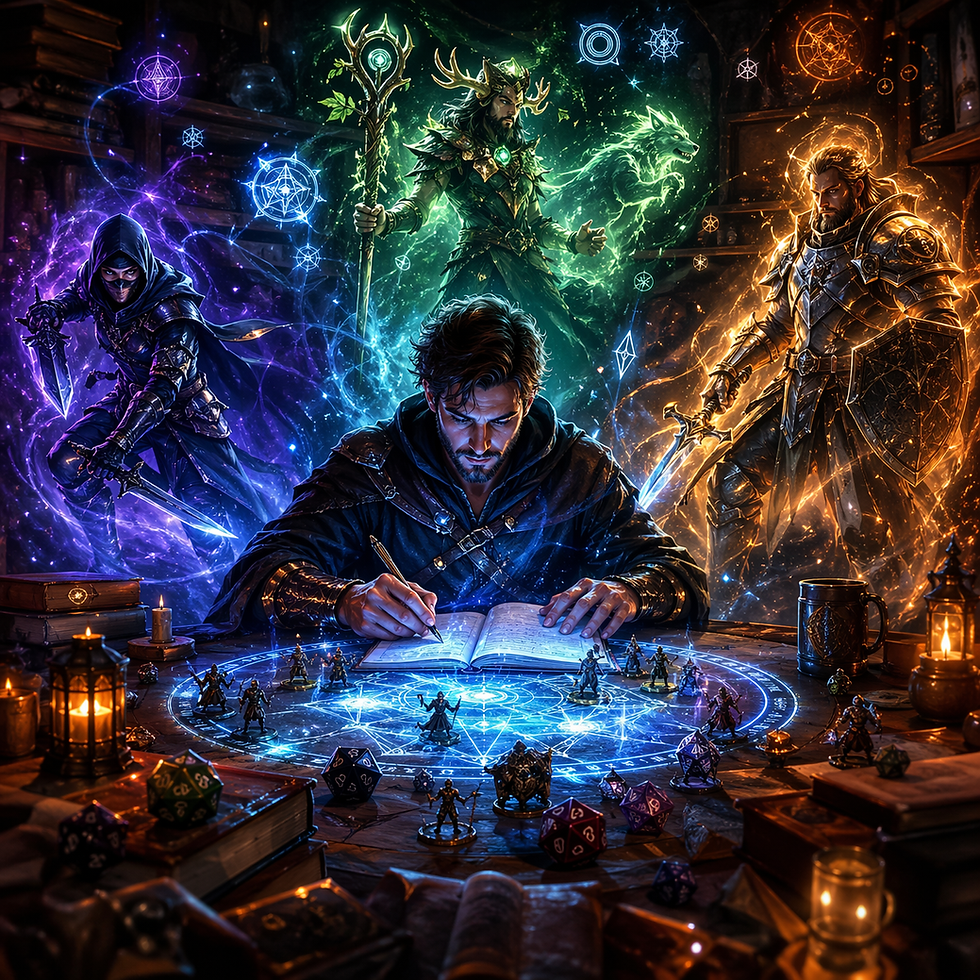
Like modding Skyrim, building custom classes in World of Warcraft, or creating a unique hero in Marvel or DC comics, homebrewing in Dungeons & Dragons 5e lets you break out of the default mold and craft something entirely your own. If playing the same subclasses starts to feel repetitive, homebrew content offers a way to refresh the experience while staying rooted in the game’s core systems. Learn about homebrew subclasses in D&D 5e, including the basics, benefits, and first steps to creating your own.
Many players find that repeating the same characters and playstyles can become monotonous over time. Homebrewing introduces new subclasses, classes, races, monsters, and magic items beyond official content, allowing the game to feel new again. For Dungeon Masters (DMs), creating homebrew subclasses is a powerful way to customize the experience. However, it requires careful design, as subclasses directly affect gameplay balance and player enjoyment.
Why Homebrew?
Advantages of Creating Homebrew Subclasses
Homebrew subclasses allow you to tailor the game to your preferences by introducing ideas not covered in official material. This level of customization can create more engaging and memorable gameplay. For example, a subclass can be designed to match a character’s backstory or introduce a new approach to combat or magic.
Enhancing the Gaming Experience
Homebrewing also encourages creativity and collaboration between players and DMs. Working together to design subclasses that fit a campaign helps build a more dynamic and personalized world.
Understanding Subclasses
A subclass is a specialized version of a base class that provides unique features and abilities. These features may enhance existing mechanics, such as improving a Druid’s Wild Shape or a Fighter’s Second Wind, or introduce entirely new capabilities. Subclasses like the Eldritch Knight and Arcane Trickster add spellcasting to classes that normally lack it.
When creating a homebrew subclass, start with a clear concept and consider how it interacts with the base class. Balance is essential, so playtesting and feedback are key. A well-designed subclass adds depth while supporting both gameplay and storytelling.
Examples of Official Subclasses
Champion (Fighter): Focuses on critical hits and physical prowess.
Circle of the Moon (Druid): Enhances Wild Shape for stronger transformations.
Arcane Trickster (Rogue): Combines stealth with spellcasting.
Step 1: Subclass Thematic
A strong theme is the foundation of any subclass. This can come from mechanics, storytelling, or inspiration from external sources. For example, the Circle of the Moon Druid centers entirely on transformation. Similarly, a Poacher Rogue concept focuses on turning monster abilities against them.
Themes can also draw from mythology, literature, or media. Concepts like a chaos-driven Cleric or a hunter-style Rogue show how narrative ideas can shape mechanics. When designing, you can either start with abilities and choose a fitting class, or begin with a theme and match it to the right class. Understanding the base class is essential to ensure the subclass integrates smoothly.
Step 2 will focus on selecting the class the subclass builds upon. The goal is not to create a new class, but to enhance an existing one without overextending its power or disrupting balance.
Conclusion
Homebrewing subclasses in D&D 5e provides a structured way to expand creativity while maintaining the integrity of the game. By understanding how subclasses function, focusing on strong themes, and carefully considering balance, you can create options that enhance both gameplay and storytelling. With thoughtful design and testing, homebrew subclasses can bring new life to familiar classes and keep your campaigns engaging.


Comments