


What Makes a Great Isekai Anime? Breaking Down the Genre’s Best and Worst
- Feb 11
- 6 min read
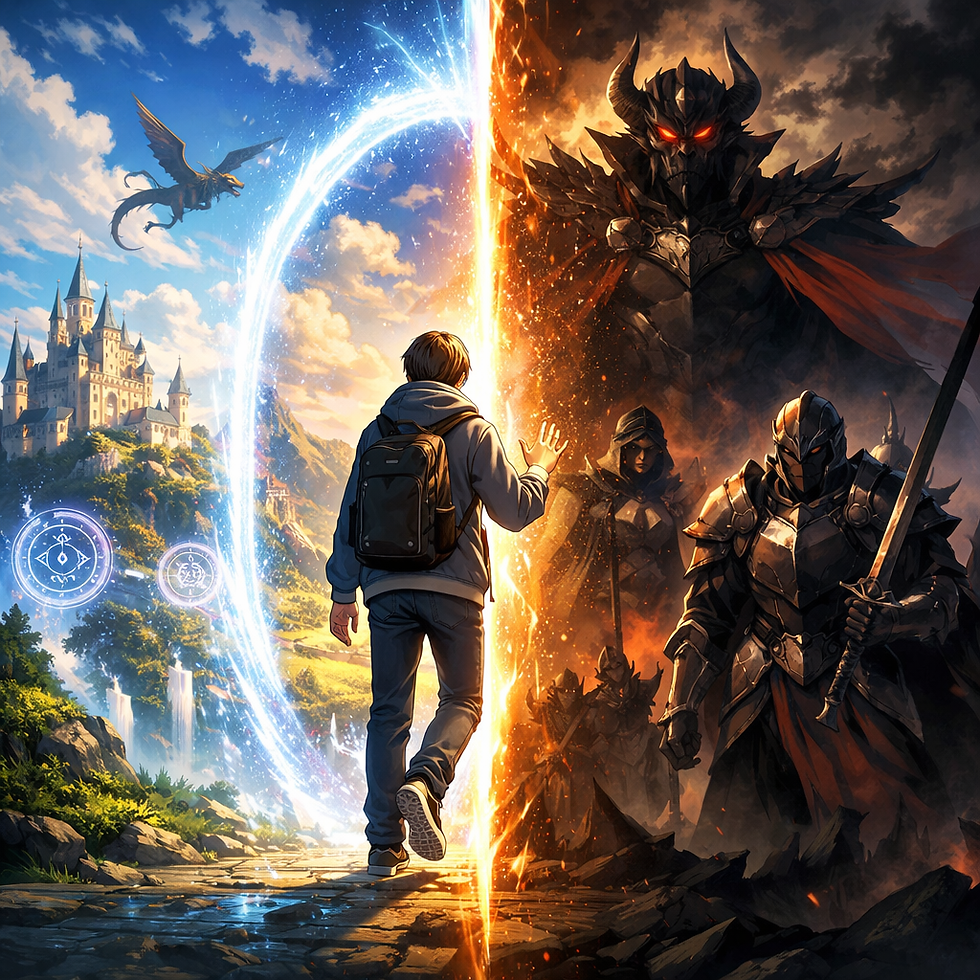
If you’ve ever watched Sword Art Online, rooted for unlikely heroes in Overlord, or imagined stepping through a portal like in The Chronicles of Narnia, you already understand the magnetic pull of isekai. The genre thrives on one irresistible question: what if you were transported into another world and given the power to reshape it? Much like embarking on a Dungeons & Dragons campaign, isekai anime invites us to leave reality behind and step into realms where magic, danger, and destiny collide.
The realm of Isekai anime stands as a captivating and immensely popular genre, where narratives unfold through the teleportation or reincarnation of individuals into fantastical or science fiction worlds. Within these alternate dimensions, they often wield exceptional powers or possess unique knowledge, thrust into the role of protagonists destined to rescue these newfound realms from impending peril. This trope’s allure lies in its ability to transport viewers beyond reality, immersing them in worlds where the extraordinary becomes the norm.
Drawing parallels between Isekai anime and my extensive involvement in Dungeons and Dragons, a shared realm of fantasy and creativity emerges. Much like the anime genre, Dungeons and Dragons transforms its players into protagonists of epic sagas. Equipped with arcane items and hard-earned wisdom, adventurers navigate treacherous landscapes. The game’s essence mirrors an isekai experience—a doorway into magic, love, conquest, and boundless possibilities far removed from our own world.
In this discussion, I will explore the nuances of Isekai anime and examine the elements that distinguish a remarkable entry in the genre. With years of avid viewership spanning beloved classics and weaker, trope-heavy renditions, this exploration seeks to celebrate the genre’s strengths, identify its shortcomings, and highlight lesser-known titles that deserve attention.
Ultimately, this endeavor aims to celebrate the positives, critique the negatives, and dissect the foundational components that form a compelling Isekai anime. By doing so, I hope to broaden perspectives, introduce overlooked series, and encourage higher creative standards within the genre.
Section 1: The Ingredients of a Great Isekai Anime:
Intriguing Premise:
Isekai narratives often follow a predictable pattern: a protagonist is transported or reborn into a parallel world, armed with extraordinary—sometimes god-like—abilities. Their mission typically involves defeating a malevolent antagonist, often a Demon King. However, strict adherence to this formula can result in a lackluster experience. A truly compelling premise introduces distinct rules or unique challenges within the new world, encouraging deeper engagement.
For example, No Game No Life places two reclusive siblings in a world where all conflicts are resolved through high-stakes games. This singular rule fuels tension and creativity. Similarly, Overlord presents an undead protagonist who shows little concern for humanity and engages in morally ambiguous actions. Ironically, he becomes the Demon King figure traditionally opposed, yet remains the central character.
A distinct and thoughtfully executed premise is crucial. Summoned to Another World for a Second Time revisits the teleportation concept but fails to meaningfully expand upon it. Although the idea of a second summoning offers potential, the protagonist retains his powers, reunites with familiar allies and enemies, and faces minimal change. The result is a stagnant narrative that does not capitalize on its own concept.
Character Development:
Character development remains essential in isekai and storytelling overall. Growth, transformation, and evolving moral perspectives allow audiences to connect with characters on a deeper level.
Sword Art Online provides a strong example. Trapped inside a virtual game where death means real-world fatality, the protagonist matures through loss, moral conflict, and hardship. He evolves from a solitary player into someone capable of teamwork and trust.
In contrast, In Another World with My Smartphone introduces a protagonist who quickly masters magic and gains multiple unique abilities within the first few episodes. With minimal resistance or meaningful opposition, his development centers primarily on expanding his harem. The absence of significant obstacles results in limited growth and diminished engagement.
Well Constructed Fantasy World:
Isekai worlds often include familiar fantasy elements such as elves, dwarves, humans, magic systems, and character classes. While these foundations are common, deeper world-building sets certain series apart.
Overlord exemplifies this depth. Its world includes a vast class system, numerous races, and tiered magical items, including god-tier artifacts capable of rivaling the protagonist. These systems create layered complexity and continual discovery.
While many series provide serviceable fantasy settings, only a few achieve notable depth and intricacy.
Challenges/Obstacles:
Challenges drive narrative tension. Whether the goal is acquiring rare items, overcoming enemies, or navigating complex relationships, obstacles must feel meaningful and sustained.
In Overlord, the pursuit of god-tier items and encounters with formidable threats—including a subordinate falling under mind control—reinforce that the protagonist is not invincible. These moments extend tension and maintain stakes.
Conversely, In Another World with My Smartphone presents conflicts that resolve effortlessly. Predictable victories and repetitive outcomes diminish suspense. Without credible challenges, engagement fades.
Meaningful obstacles—and the process of overcoming them—are central to a compelling isekai story.
Plot Progression:
Challenges directly influence plot development. A recurring issue within isekai storytelling is what I refer to as the “god issue.” Many protagonists rapidly achieve overwhelming power, raising a central question: if they are already near-invincible, why not immediately confront and defeat the Demon King?
When this occurs, narratives often extend through minor subplots that feel inconsequential. I describe this tipping point as the “god count”—the episode at which it becomes clear that no obstacle truly threatens the protagonist. Once reached, monotony can set in.
In Another World with My Smartphone reaches this point almost immediately. By contrast, Overlord and The World’s Finest Assassin Gets Reincarnated in Another World as an Aristocrat avoid this pitfall. In the latter, the protagonist’s mission to eliminate a future hero unfolds gradually, with continued growth and strategic complexity.
Animation and Art:
Visual execution is critical, especially in a genre dependent on fantastical settings. Effective animation brings spells, creatures, and combat sequences to life.
Dynamic fight scenes demand careful choreography and visual clarity. Swordplay, magical effects, and shield combat must feel kinetic and immersive.
Isekai de Cheat Skill wo Te ni Shita Ore wa, Genjitsu Sekai wo mo Musou Suru: Level Up wa Jinsei wo Kaeta demonstrates strong visual storytelling, presenting a distinct artistic style that differentiates it from many contemporaries.
Section 2: Gems of Isekai: Showcasing Positive Examples:
Below is a selection of standout isekai anime. These are not ranked but represent strong examples within the genre.
Overlord
A visually impressive and dark narrative centered on an undead protagonist seeking domination. The series balances powerful magic, moral ambiguity, and meaningful challenges.
Log Horizon
Though visually straightforward, it excels in narrative depth. Players trapped in a game must navigate societal restructuring as non-playable characters gain sentience.
Sword Art Online
A story driven by mortality and despair. Trapped players face real-world death consequences, creating emotional and psychological weight.
The World’s Finest Assassin Gets Reincarnated in Another World as an Aristocrat
A strategic narrative where the protagonist must eliminate a future hero. Power is balanced with planning and growth.
Mushoku Tensei: Jobless Reincarnation
A mature story of reincarnation and personal growth, blending humor, complex themes, and gradual development.
Handyman Saitou in Another World
A grounded premise where practical skills—not overwhelming power—drive impact within a fantasy setting.
The Rising of the Shield Hero
A protagonist falsely accused and ostracized must navigate hostility and adversity, shaping his development.
Uncle from Another World
A reverse isekai that explores reintegration into modern society while retaining fantasy-world powers.
KamiKatsu: Working for God in a Godless World
A mature narrative set in a technologically regressed future with layered thematic exploration.
Dead Mount Death Play
A recent addition featuring the reincarnation of the Death King into modern society, blending survival tension with striking visuals.
Bonuses:
Additional recommendations include:
Trapped in a Dating Sim: The World of Otome Games is Tough for Mobs
The Eminence in Shadow
Isekai de Cheat Skill wo Te ni Shita Ore wa, Genjitsu Sekai wo mo Musou Suru: Level Up wa Jinsei wo Kaeta
Section 3: Stumbling Blocks: Analyzing Negative Examples:
The following series, in my view, fall short due to excessively overpowered protagonists and limited narrative tension. In some cases, the creative direction feels secondary to commercial intent, such as with Reborn as a Vending Machine, I Now Wander the Dungeon.
The Greatest Demon Lord Is Reborn as a Typical Nobody
Skeleton Knight in Another World
Summoned to Another World for a Second Time
My One-Hit Kill Sister
Farming Life in Another World
The Reincarnation of the Strongest Exorcist in Another World
The Fruit of Evolution
In Another World With My Smartphone
Kuro no Shoukanshi
Reborn as a Vending Machine, I Now Wander the Dungeon
Section 4: Conclusion
The isekai genre offers a compelling escape through reincarnation and world transportation narratives. Strong premises, meaningful character growth, well-constructed worlds, sustained challenges, and effective visual execution define its best entries. Throughout this discussion, I have highlighted series that succeed in these areas while noting others that struggle.
Personally, I am deeply drawn to isekai, finding its appeal comparable to the immersive creativity of Dungeons and Dragons. While I recognize potential concerns surrounding certain thematic elements, the genre’s overall allure remains strong. Given that it comprises the vast majority of my viewing preferences, I continue to recommend exploring the world of isekai anime.


Comments