


Zombie Horde (D&D 5e): Lore, Tactics, Loot & Swarm Mechanics
- Feb 16
- 3 min read
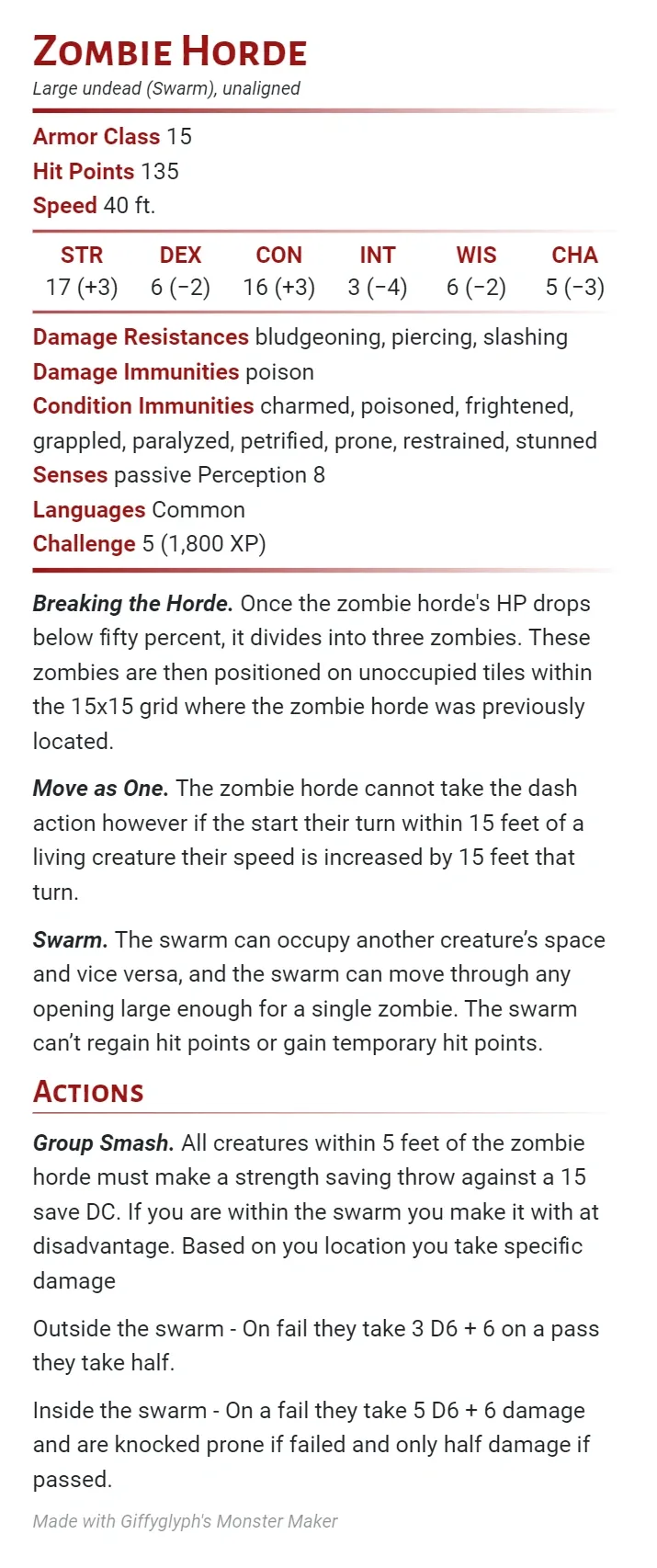
FOR MONSTER STATS GO TO BOTTOM OF PAGE
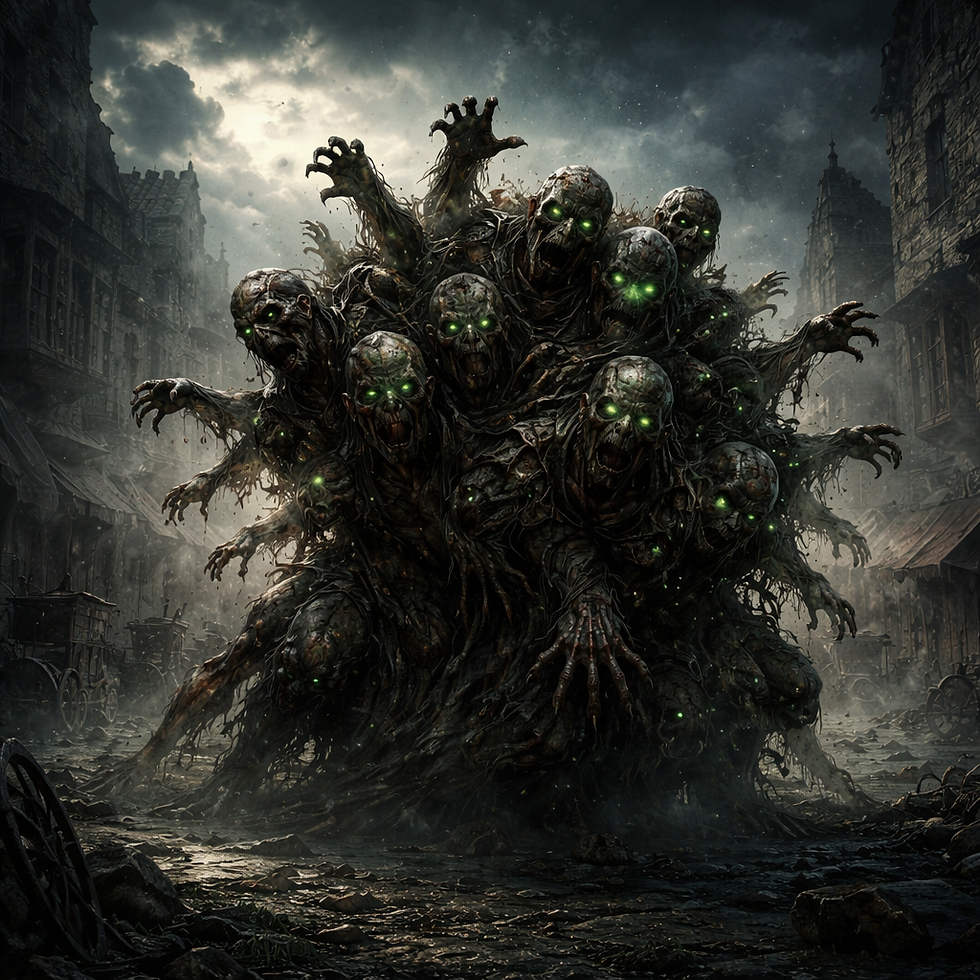
From the shambling dread of The Walking Dead to the relentless tide of undead in World War Z, few threats capture primal fear like an unstoppable mass of corpses closing in. In the depths of forgotten crypts and cursed swamps—where the veil between life and death thins—the Zombie Horde roams as a relentless scourge, born from malevolent sorcery or the dark forces of necromancy.
The Zombie Horde is no solitary creature. It is a writhing mass of decayed flesh and broken bones—a macabre amalgamation of humanoid forms stripped of individuality and bound to a singular purpose: to swell the ranks of the undead. Each body within the horde stands as a testament to the horror of undeath, its once-human features twisted into grotesque remnants of a former life.
Driven by a primal instinct to consume and spread its blight, the horde descends upon the living like an unrelenting tide. It overwhelms prey through sheer numbers and tireless persistence. Those who encounter it find themselves besieged on all sides by grasping hands and gnashing teeth, their screams swallowed by guttural moans.
Most chilling of all is the horde’s ability to grow stronger with each victim it claims. As its numbers swell, so does its ferocity, fueled by unholy fervor. At its core lurks the dark master who unleashed this plague, directing its movements with sinister intelligence and feeding its insatiable hunger.
Behavior/Tactics:
When used by a dungeon master, Zombie Hordes typically inhabit open fields or urban areas already devastated by undead assaults. They often serve under liches or other powerful undead.
Their tactics center on swarming and enveloping any living creature they encounter. They prioritize the nearest target, overwhelming it through numbers. Upon a victim’s demise, the fallen are absorbed into the collective mass.
Ecology:
Zombie hordes consume anything living. This behavior may stem from the nature of their transformation or from a primal hunger for life itself, as they exist in the liminal space between life and death.
Loot:
After defeating a zombie horde—or the undead it spawned—your rewards may include:
Antique Weapons: Rusted swords, battered shields, or weathered axes from battles long past.
Herbs and Potions: Healing or enhancement concoctions gathered from the wild or brewed by alchemists.
Lost Treasures: Trinkets and baubles once cherished by the living.
Gold and Currency: Coins and valuables scavenged from fallen victims.
Forgotten Knowledge: Scrolls, tomes, or ancient manuscripts containing hidden secrets.
Magical Artifacts: Enchanted relics imbued with mysterious power.
Variants:
This faction has no alternate versions. However, it can include ogre zombies; instead of generating three standard zombies, you spawn one ogre zombie.
Credits:
Zombies have always been a staple of the battle arena—though often predictable. With their undead presence seen in The Walking Dead and the chaos of 28 Days Later, they remain iconic.
The concept here reimagines them as something more overwhelming: a fusion of swarm mechanics and undead horror. Like spiders that gather in numbers, nine zombies combine into a single terrifying mass. It evokes the collision of Night of the Living Dead and Arachnophobia—a nightmare pairing designed to amplify the dread of facing not just one corpse, but an unstoppable collective.
Comments